Grace periods, explained
July 14, 2026
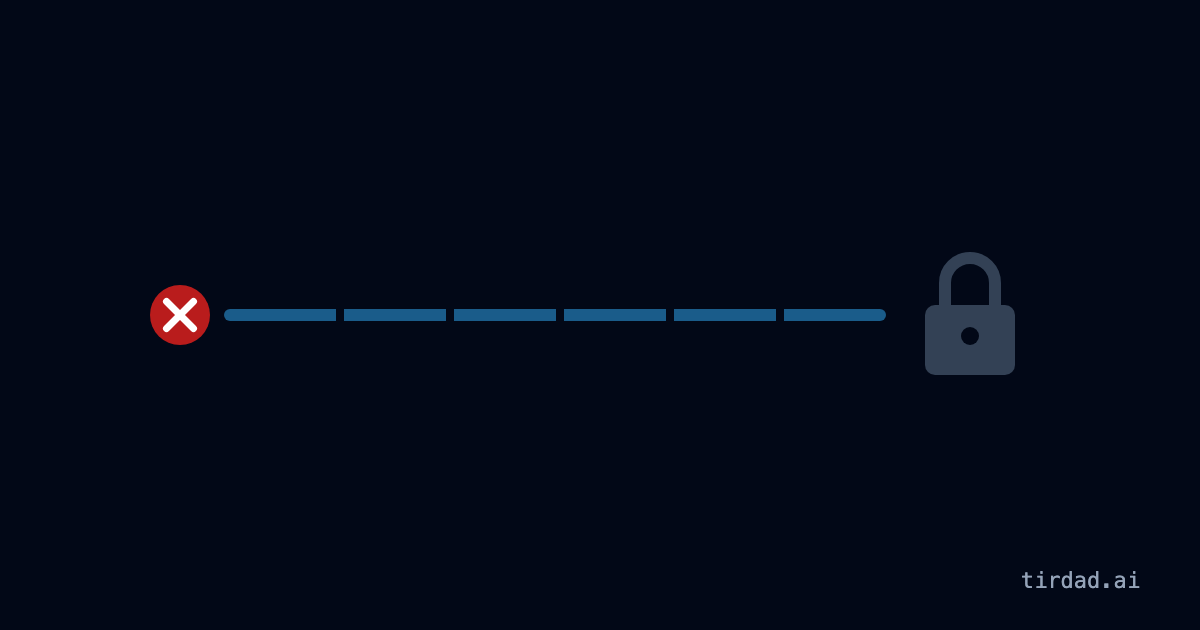
A payment fails at 2am. Does the customer lose access at 2:01?
If yes, your most loyal customer — the one whose card simply expired — wakes up locked out of a tool their team depends on, and their first experience of your brand that day is a wall. If no, then… when? A week? A month? Never? Whatever you answer, you've just designed a grace period. The only question is whether you designed it on purpose.
What a grace period is
A grace period is the defined window between a failed payment and its consequence — the time a customer keeps access while the payment gets fixed. It's the customer-facing half of dunning: dunning works on recovering the money; the grace period governs what the customer experiences meanwhile.
Two numbers define it: how long it lasts, and what happens when it ends.
The balance it strikes
A grace period is a trade between two failure modes:
- Too short, and you punish good customers for bank problems. Cards expire on schedule; banks decline routine charges; none of this is a decision the customer made. Cutting access instantly converts a payment hiccup into a cancellation decision you forced.
- Too long, and payment becomes optional. If access continues indefinitely, the invoice loses its authority, and your most price-sensitive customers learn the lesson quickly.
Most subscription businesses land between 7 and 14 days — long enough to span a payday and a card renewal, short enough that the invoice still means something. B2B products with monthly invoicing often go longer; consumer products shorter.
The subtler lever is what access remains during grace. Full access with increasingly direct reminders is the gentlest. Degraded access — read-only, or core features only — makes the situation unmistakable without destroying the customer's work. What matters is that it's consistent and predictable, because a grace period applied unevenly is indistinguishable from no policy at all.
Policy, not improvisation
The worst version of a grace period is the one that lives in support tickets — where whoever answers decides, where persistent customers get more slack than polite ones, and where finance can't say how much revenue is sitting in the "failed but active" state. The whole value of a grace period comes from it being a rule the system enforces, not a favor a human grants.
What this looks like in Tirdad
In Tirdad, the window between failure and consequence is explicit:
- Subscription states track the situation — a subscription with a failed payment is visibly past-due, not silently broken.
- The policy is configuration — how long grace lasts and what ends it are settings, applied the same way to every customer.
- Entitlements do the enforcement — when grace ends, access changes automatically; nobody runs a script or remembers to flip a flag.
- Webhook events mark every transition, so reminders escalate on schedule and your team sees the pipeline of at-risk revenue, not anecdotes.
The 2am payment failure becomes a two-week, fully-automated conversation — and most of those conversations end with a recovered customer.
This is billing, explained · 06 — one billing concept a week, in plain language. Previously: MRR. Next up: credits.
Ready to turn payment failures into policy? Start free at tirdad.ai.