Dunning, explained
July 12, 2026
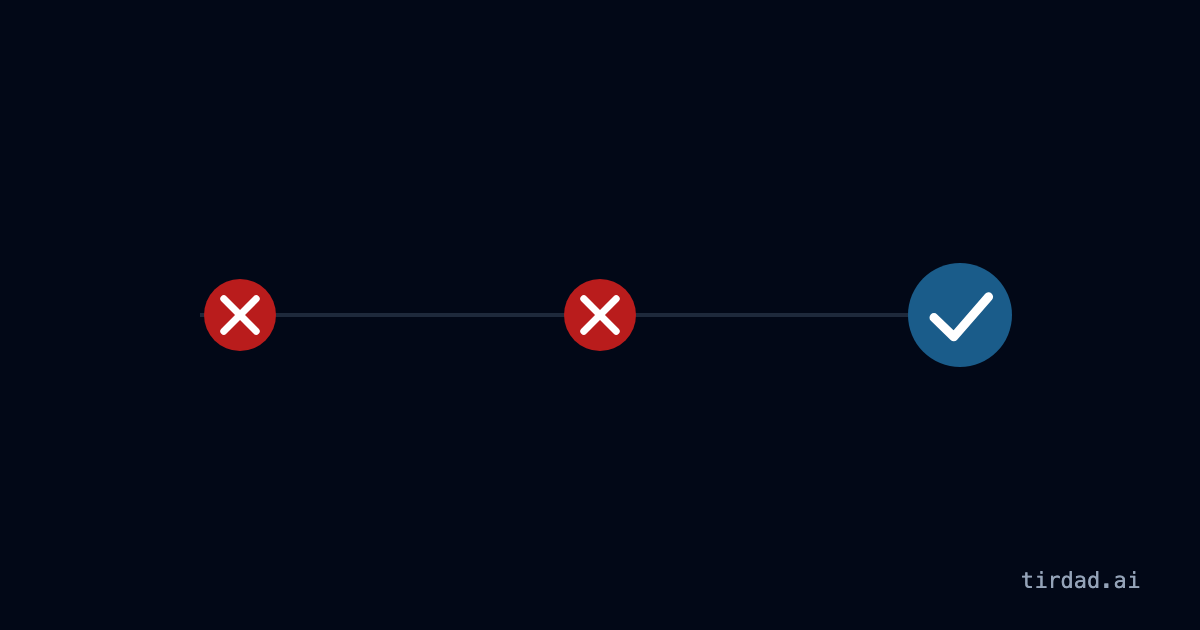
A customer's payment fails at renewal. Here is the uncomfortable part: they didn't cancel. They still want your product. Their card expired, or hit a limit, or the bank flagged a routine charge — and most businesses discover it weeks later, as a line in a reconciliation spreadsheet, after access has lapsed and the customer has quietly moved on.
That's involuntary churn — losing customers who never decided to leave. For subscription businesses it's a meaningful share of all churn, and it's the most fixable share, because the customer is on your side.
What dunning is
Dunning is the structured process of recovering a failed payment: retry the charge on a sensible schedule, remind the customer with clear messages, and resolve the situation one way or the other — payment recovered, payment method updated, or the subscription wound down deliberately instead of silently.
The name is old — it comes from centuries of politely persistent debt letters — but the modern version is mostly automation and timing.
Why timing is the whole game
A failed charge retried one minute later usually fails again for the same reason. The same charge retried three days later — after payday, after the card was renewed, after the bank's fraud flag relaxed — often succeeds. Good dunning is patient and spaced: a handful of retries over one to two weeks beats hammering the card on day one.
The reminders matter as much as the retries. A good dunning message does three things: says plainly that the payment failed, makes zero accusations, and contains one link that fixes it — pay the invoice, or update the card. Every extra step in that flow costs recovered revenue.
And when everything fails, dunning still has a job: ending the subscription deliberately — with a defined grace period, a final notice, and a clean invoice trail — instead of letting access rot.
What this looks like in Tirdad
In Tirdad, the failed payment is a tracked state, not a surprise:
- Every invoice carries a payment status — pending, succeeded, failed, refunded, even overpaid — so nothing lives in a spreadsheet.
- Webhook events fire on payment failures, so your reminders, alerts, and internal flags run the moment it happens.
- Every invoice has a public payment link — the customer can pay directly from the reminder, no login, no support ticket.
- The wind-down is policy — grace behavior and what happens at the end are settings you choose, enforced automatically.
The customer whose card expired gets an email, clicks a link, pays in a minute — and never knows they were almost churned.
This is billing, explained · 04 — one billing concept a week, in plain language. Previously: proration. Next up: MRR.
Ready to stop losing customers who didn't leave? Start free at tirdad.ai.